At Cabratosa Odontologia, we offer a wide range of personalized dental treatments in Girona that guarantee the health, function, and aesthetics of your mouth.
We work with the most advanced technology and a highly qualified team in different specialties, from prevention to the most complex solutions. Whether for a routine check-up or for an implantology, orthodontics, dental aesthetics, or oral surgery treatment, we are prepared to offer you a quality, friendly, and trustworthy service.

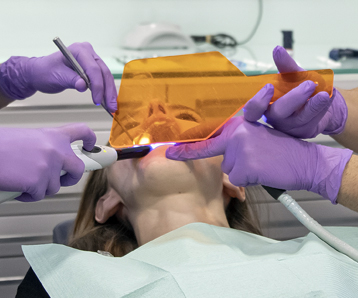
Prevention is the basis of good oral health. The most common dental problems are tooth decay (caries) and gum disease. All these diseases are caused by bacteria found in dental plaque, which is a sticky layer that forms on the teeth.
Caries is the destruction of the tooth by the acids of these bacteria. Good dental hygiene and diet control are very important to prevent it.
Gum diseases are caused by plaque and tartar. To prevent and treat them, it is necessary to control and eliminate plaque and tartar with good hygiene habits and periodic maintenance.
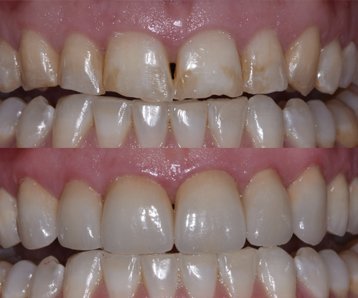
Dental aesthetics seeks a beautiful and healthy smile. There are treatments focused on beauty, such as whitening or veneers, which must also take care of the function and health of the teeth.
Thanks to materials like dental composite, new ceramics, and minimally invasive techniques, we can perform aesthetic restorations while being as conservative as possible. We also avoid old dark fillings (amalgam) and can perform treatments that improve your smile safely and effectively.
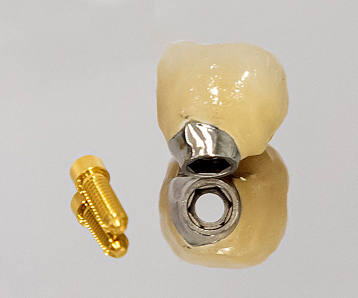
Dental implants are like artificial "roots," made of titanium, that are placed in the jawbone. They are used to hold fixed false teeth, replacing lost teeth.
Nowadays, implants are one of the best options because they do not require treating neighboring teeth, thus offering a very stable and comfortable solution. To place them, there must be enough bone, but if there isn't, it can be surgically regenerated. After placement, it takes a few months for them to integrate well into the bone before the definitive prosthesis is placed.
Each case is evaluated individually, with 3D radiology and digital planning, to guarantee a safe result adapted to the needs of each patient.
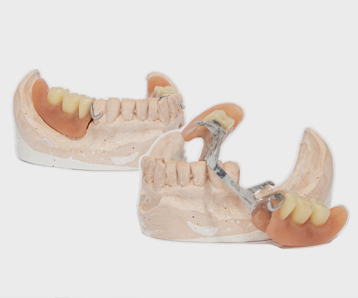
For the replacement of lost or badly damaged teeth, we have two types of prosthetics: removable and fixed. Removable prosthetics are a simpler option, but they require the prosthesis to be removed for cleaning after each meal. It is also important to consider aesthetics, as in some cases, the hooks may be visible.
Fixed prosthetics are permanently integrated into the mouth and cannot be removed by the patient. They can be supported by implants or by teeth, depending on the characteristics of the case.
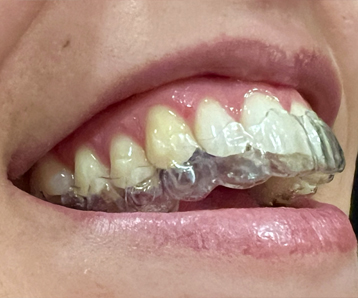
Orthodontics is the treatment that corrects the position of the teeth to improve their function and aesthetics. It is applied to children, adolescents, and adults.
It can be fixed with metallic or ceramic bracket systems; or removable with invisible aligner systems or resin appliances.
A personalized study must be carried out to decide which is the best option for each patient.
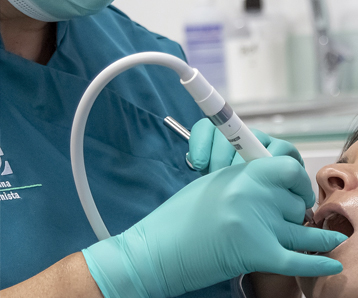
Periodontics deals with the prevention, diagnosis, and treatment of diseases that affect the gums and the bone surrounding teeth and implants.
Through complete periodontal diagnoses, deep cleanings, and dental scaling (root planing), personalized monitoring can be done to keep pathologies controlled and preserve the supporting structures of the mouth.
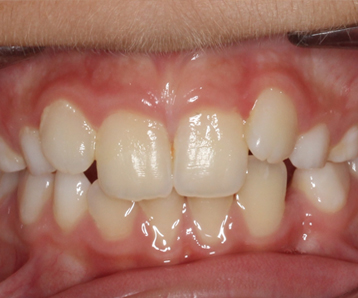
Caring for children's oral health, with treatments adapted to each stage of growth, helps raise their awareness of their teeth and gums from a young age, thus reinforcing their confidence.
It is advisable for children to visit the dentist starting at the age of 2.5 years or, at the latest, at 4-5 years. The first permanent molar appears around the age of 6 years, which often goes unnoticed. The main objective is the prevention of dental caries and other problems, through good oral hygiene, diet, and treatments such as fluoride. Furthermore, it is important to care for baby teeth, as they help maintain the space for the correct eruption of permanent teeth.
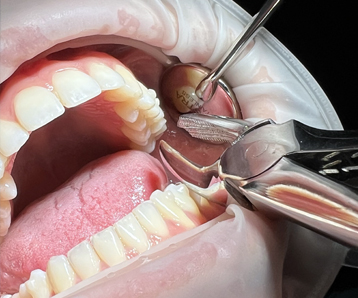
Oral surgery includes surgical techniques performed in the oral cavity, such as: extractions of wisdom teeth or impacted teeth, cysts, frenectomies, apicectomies, and peri-implant surgery. These surgeries are generally performed with local anesthesia, although sometimes sedation may be applied by an anesthesiologist. Each case is evaluated individually in conjunction with the interdisciplinary team to achieve the best result in every situation.
More information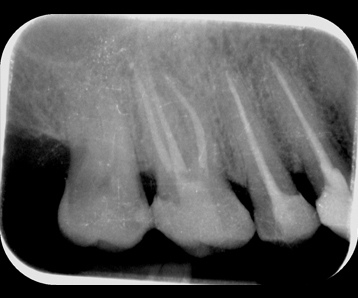
Endodontics is the treatment that removes the dental pulp ("nerve"), an internal part of the tooth that can cause pain or infection. The main cause is dental caries, but it can also be due to a deep filling, a fissure from overloading, or gum problems. If the pulp is diseased, it can cause infections or bone loss.
The procedure consists of opening the tooth, cleaning and disinfecting its interior, and finally, sealing it provisionally. A few days later, it is definitively repaired. This way, the functionality of the tooth is prolonged.
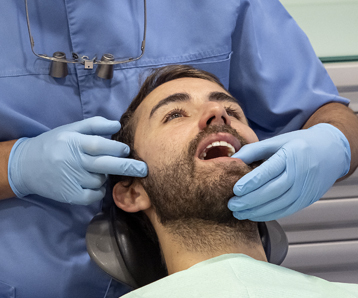
Temporomandibular disorders are conditions of the facial muscles and/or the temporomandibular joints (TMJ). These problems can cause: constant or intermittent pain in the face, head, or near the ear, difficulty opening the mouth, or noises when moving it.
The cause is often difficult to determine, but it is related to factors such as stress, bruxism (involuntary grinding or clenching of the teeth), or trauma. The most frequent treatment includes changing habits, the use of occlusal splints, and, in many cases, physiotherapy.
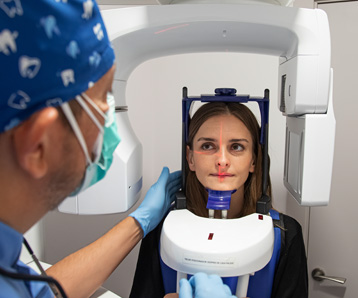
Digital radiology allows obtaining precise and high-quality images for diagnosis with low radiation exposure.
Thanks to periapical radiographs, orthopantomographies, and 3D tomographies (CBCT), treatments can be planned and more precise diagnoses can be made.
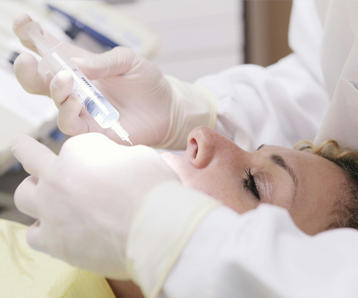
Conscious sedation is a medical procedure that combines a relaxant with local anesthesia to make surgical procedures more comfortable for the patient. It is administered by an anesthesiologist, who monitors the patient at all times.
During the procedure, the patient is relaxed and drowsy, but conscious. After an hour, they can return home, although they must avoid driving or drinking alcohol for the rest of the day.

Snoring and sleep apnea can have serious consequences for general health.
As dentists, we can help interdisciplinarily to keep the airway open during sleep and improve its quality and general well-being by creating personalized mandibular advancement devices (splints).

 +34 972 221 407